Finding Home at Tides End

Finding home at Tides End


2024 TIDFF

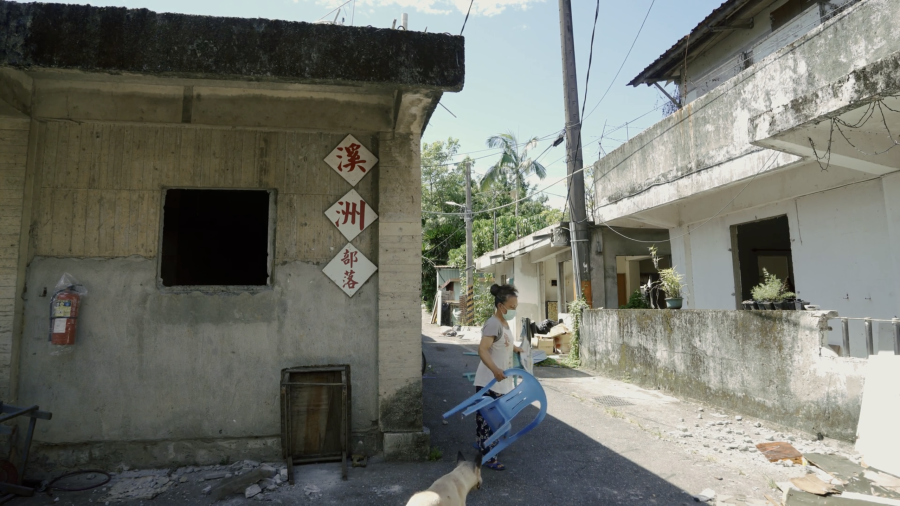
In the Amis language, a moment signifies peace and a sense of ‘home’ when the ocean calms. This metaphorically relates to the journey of a group of Amis people who left their coastal homes in the 1970s for city work. In Taipei, they established the “Xizhou Tribe” near a riverbank, contributing to urban development but ultimately facing displacement. This dichotomy highlights the choices they made: some stayed in cities, while others returned to ancestral lands. Decades later, as they completed new houses, their story reflects a deeper narrative of indigenous urbanization—a crossroads of starting anew or enduring broken connections with their past and identity.

Dialogue Among Tribes

Dialogue Among Tribes

2017 TIEFF

In 1987, as Taiwan had just lifted martial law, society and the economy were undergoing rapid transformation, and Indigenous peoples faced a wave of urban migration and labor relocation. An Amis man Du-Ya Pan Ming-fu, his childhood friend Duwake, a Kavalan artist, and Lai-Sa-Gai-Nu Tian Acheng in Xiangbi Village, have different but intertwined lives. Though the three men were compelled by economic hardship to leave their homes, they did not bow to fate nor choose to remain in the city forever. In an era when Indigenous peoples were overlooked, they each steadfastly confronted their identity and cultural values, forging life paths that intertwined in unique ways.

“The Homeless Coast” The 1877 Cepo’ War

“The Homeless Coast” The 1877 Cepo’

In 1999 Lekal Makor, the head of an Indigenous Amis community in Taiwan, recorded their oral history. He recounted an 1877 ambush by Qing soldiers at a banquet in the Amis village of Cepo’. The events of the massacre in modern day Hualien have been buried for more than a century. The Cepo’ War is a deliberate gap in official historical records; remembered only in the stories told by Indigenous elders. No one is sure where the story began, but it continues to this day. In 2022, the Amis called upon their ancestors to help uncover the truth buried in their village. But some members of the community were unsure about digging up the past…

Back to Topa

Back to Topa

The director unexpectedly overheard stories about his mother’s family and decided to pick up a camera to explore a century-old history: Topa, a Tayal tribe that once lived in Sanxia but was displaced to Taoyuan’s Fuxing District due to Japanese rule. The main subjects of this documentary are descendants who are striving in their own ways to preserve the memory of Topa. Through their efforts, the connection between their lives and history is finally being brought back to light