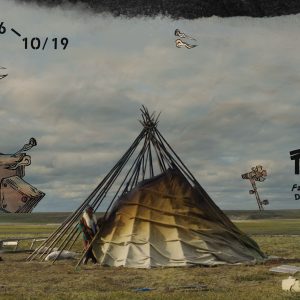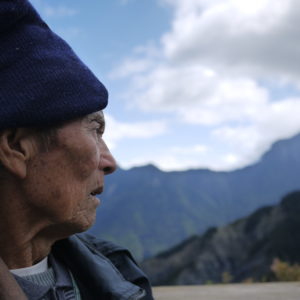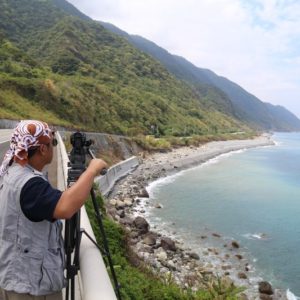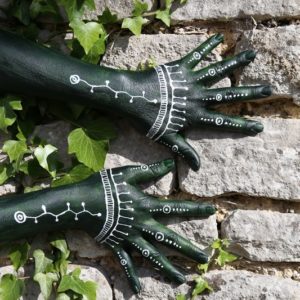
The Taiwan International Ethnographic Film Festival and NDHU’s Department of Ethnic Relations and Cultures are very happy to announce the Hualien edition of the 2018 Taiwan International Ethnographic Film Festival (TIEFF), the oldest and longest running festival of its kind in Asia, featuring eleven films specially selected from the 42 films that appeared at last year’s festival in Taipei. The festival will run for four days, from 5/2 to 5/5. All films have both English and Chinese subtitles and are free and open to the public. The full schedule is below.
Seven of the films are about indigenous Taiwanese issues, including two films by this year’s featured Taiwanese director, Etan Pavavalung. Etan is an indigenous artist from the Paiwan community of Paridrayan in Pingtung county, located in the mountains of southern Taiwan. Etan’s work is grounded in the concept of vecik, a Paiwan word which expresses a number of symbolic activities which he has translated as “trace-layer-carve-paint.” This reflects both the diversity of Etan’s own artistic output, which spans multiple media, including drawing, painting, engraving, printing, and installation art, as well as his vision of art as an inscription of nature. His documentary films are no different and are best seen as an extension of vecik into yet another medium.
We are also pleased to feature “Path of Destiny” directed by Yang Chun-Kai, a professor in the Department of Language and Communication at NDHU’s College of Indigenous Studies, which documents a group of Sikawasay from the Amis tribe of Hualien, Taiwan, known as the people who possess gods. This fate calls upon them to maintain traditional rituals to serve the tribe, living by way of interaction with the gods. The film follows the work of Panay Mulu, who is also a professor at NDHU’s College of Indigenous Studies (in the Department of Ethnic Relations and Cultures). Panay has been with the Sikawasay for more than 20 years, working to record the traditional rituals that are about to disappear, and also capture stories of their unique life. In the end, Panay Mulu felt that the gods had also guided her to face her own “path of destiny.”
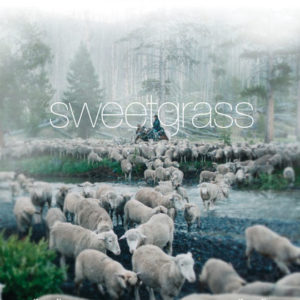
The closing film of the festival is Sweetgrass by Ilisa Barbash and Lucien Castaing-Taylor. Castaing-Taylor was this year’s featured international director. His “sensory” approach to ethnographic filmmaking seeks to capture the immersive experience of long-term fieldwork and de-emphasizes spoken language in favor of the visual and auditory aspects of the ethnographic encounter. As a result of this approach, these films are deeply aesthetic experiences that have deservedly been as celebrated in the art world as they have been by academics.
Because of the tremendous cinematic beauty of some of these films, we are very happy to announce that this year we will be able to, for the first time, screen some of the festival films at Hualiane’s Showtime Cinema. See the schedule for the time and location of each film, as well as whether or not there will be a post-film Q&A with the director.
Films will be held either at National Dong Hwa University (NDHU) or Showtime Cinema in Hualien, as listed in the program. See here for directions to NDHU. See here for directions to Showtime Cinema.
For the latest updates to our program, please “like” our page on Facebook.
If you have any questions, contact 楊清智 (Qing-Zhi Yang) at s8511060 [at] gmail [dot] com